Saturday, April 4, 2026

Introducing "Mr. Bonnie"

At Oklahoma State University, faculty leading a study abroad course have the option to bring a “support companion.” They must pay for their airfare, any hotel differential, food, any activities they plan to join, and OSU’s approved travel insurance for the trip. For our course in Milan, we had three official faculty leaders each with their companion, our on the ground liaison and 23 students. 

Not only is it great to be able to share these experiences with someone you care about but also they really do provide valuable support. While a fun experience for everyone, these are work trips for the faculty. We are managing a large group made up of many first-time travelers, navigating a foreign city and teaching a university course along the way. 

It’s nice to decompress with your person and have someone to keep you company during the students’ free time. It’s also great to have a few extra chaperones, even if they are serving in an unofficial capacity. With a group of 23 students, we tended to keep one couple in front leading the way, a second couple midway to keep the group together, and the last couple at the back to ensure no one got separated. We were navigating busy streets, hopping metros and making train changes. We needed all hands on deck. 

This was John’s second time to join me on a study abroad, and he really found his groove and enjoyed his role. I describe his job as being open to chats and an occasional question and standing by being vaguely dad-shaped when needed. With 23 young women in a foreign country, it is surprisingly handy to simply have a couple large men stand with you. 

Around the second day, we were breaking up into groups and some of the students announced, “We’re going with Bonnie and… um… Mr. Bonnie.” We had a chuckle, I introduced John to the group, but the nickname stuck and honestly it seemed to be a term of endearment. Even students who knew him called him Mr. Bonnie and by the end of the day he was answering to it without even thinking.

John poses on a small terrace of the Duomo.


Thursday, April 2, 2026

It’s Tuesday, it must be Switzerland: Epic views and life-changing fondue in Lugano

Bonnie and John pose behind a large "I heart Lugano" sign. The lake and alps are in the background.

While Milan is an amazing and beautiful city, and there are still lots of things we hope to see the next time we visit, it’s also a great hub. Throughout this visit we took three day trips. For our first, we hopped a train to Switzerland and spent the day in Lugano. 

The town of Lugano sits on a lake nestled in the mountainside of the Alps. We stepped out of the train station to some stunning views. We began the trek downhill to the Old Town, which was filled with boutiques and vintage luxury shops. After a quick orientation, we set the students loose for the morning and began our own stroll through the cobblestone streets. 

Lake and mountain view in Lugano.

The timing was perfect for us to grab an hour-long ferry ride of the lake. If we thought the views from the hillside were awesome, the views from the center of the lake were stupendous. Snowcapped mountains stretched in every direction and adorable villages dotted the shores. It was just a commuter ferry, no tour or guide, but we were wowed. It was definitely a great way to spend the morning. 

John and Bonnie on a boat bearing the Switzerland flag, Alps in the background.

Upon our return, we stopped at a nice cafe that touted a fondue menu on their sidewalk chalkboard. This was another great spur of the moment decision. It’s no exaggeration to say this fondue is in the running for one of the most delicious meals I’ve ever had. My co-faculty, Lori, and I split a fondue pot and by the end of the meal, we were only half joking as we planned our next study abroad to Switzerland so we could eat fondue this good for a solid week. 

We sent the husbands off to explore the casino while we did some window shopping. Lori was seriously tempted by some vintage handbags, and I was pulled in by some handmade pieces at the local boutiques. 

After a guided walking tour, the group began the trek back to the train station. Half took the funicular, and I took the brave cohort that decided to walk. It was much, much further than I had remembered from the way down. We turned a corner that I thought was nearly the end only to discover we were less than halfway. After 6-8 blocks of steep stairs, we reached the station a bit winded but proud of our efforts. Our guide was astounded by how quickly we made the walk. He said he’d planned an hour to get us back; we’d made it in less than 20 minutes. 

One thing that surprises and tickles me on these trips is how tired the students get in comparison to the faculty. This day was a perfect example as nearly every student passed out on the train ride back to Milan. 

To guide learning, I gave the student a few framing questions each morning. On this day, I asked: 

  • Lugano blends Italian language and lifestyle with Swiss order and affluence. How could influencers use that duality to position Lugano as a distinct kind of luxury lifestyle, different from both Milan and classic Switzerland?
  • Unlike Venice or Lake Como, Lugano’s luxury shows up in more subtle ways like the lakeside promenades, arcades on Via Nassa, parks like Parco Ciani, and cafĂ© culture. As you walk, consider what small, everyday moments here could be framed as “quiet luxury” in influencer content?


Tuesday, March 31, 2026

The Duomo welcomes us to Milan

We landed in Milan two days late and 46 miles from our original destination (a story for a later post). Somehow, we sped to the hotel just in time to drop our bags, smear on some sunscreen and run to catch my students as they embarked on the first major activity of the trip, a climb to the roof of the Duomo. 

Milan's Duomo

If you are looking for pictures of Milan, chances are good that the Duomo will dominate the results. The Metropolitan Cathedral-Basilica of the Nativity of Saint Mary is the largest church in Italy and one of the largest in the world. It took about 600 years to complete and features 135 spires, more than 3,400 statues, 135 gargoyles and 700 figures.

What a welcome to Milan. The cathedral is nothing short of breathtaking. The view from the plaza is impressive, but the climb to the roof brings you face-to-face with the intricate architecture. 

A short elevator ride brought us halfway, then the series of staircases began. I quickly found an opening the students overlooked in a narrow passageway. No gates, ropes or signs indicated it was closed to the public and with that we found ourselves standing on the literal roof. Needless to say we were all immediately thrilled with the detour. 

Bonnie leans out an opening in the wall of the Duomo, many stories up.

We took our time climbing the stairs and exploring every nook and cranny we could fit ourselves into. From the roof, we had panoramic views of Milan. The day was so clear, we could see the Alps from our perch on top of the city. 

John and I have an inside joke that we have to visit the tallest structure in any city we visit, so that trip requirement was checked off quickly this time. The Duomo did not disappoint, and it was clear why this is a must-see stop for any trip to Milan. 

Selfie of John and Bonnie on the rooftop of the Milan Duomo.

To guide learning, I gave the student a few framing questions each morning. On this day, I asked: 

  • After walking the fashion district and standing on the Duomo terraces, how has your sense of where luxury influence comes from in Milan shifted? Do you see it more in specific brands, in the city’s overall atmosphere, or in the way visitors and locals express style in these spaces?
  • If you were guiding an influencer through this same day, what three content moments would you insist they capture to tell a richer story about Milanese luxury?
  • How does moving between commercial/luxury space (Quadrilatero della Moda) and sacred/historic space (the Duomo) affect your thinking about the line between cultural experience and branded experience in influencer communication?


Sunday, March 29, 2026

More than a field trip, less than a semester abroad: Faculty-led study abroad, the Goldilocks of education travel

Students join three faculty members for a group photo on the roof of the Milan Duomo.
Rooftop stop on the Duomo.

When I was a college student, “study abroad” meant you spent one to two semesters living and taking courses in another country. It was a big, costly undertaking and honestly something that never seemed accessible to me. Today, Oklahoma State University (and many more I’m sure) have added another option that has opened global experiential learning to a wider audience. Enter the faculty-led study abroad course.

I recently returned from leading my second such class where two fellow professors and I took 23 students on a week-long spring break trip to Milan, Italy. The trip, of course, is the foundation of the course, which also includes both pre- and post-departure class meetings, presentations by the students, on-the-ground assignments throughout the week, and a final paper. Our students are earning three credit hours for “Influencer Communications in Luxury Spaces.”

Students enroll in the course, pay the associated tuition and fees, and purchase their own airfare. The fees are naturally higher than your average college course because they include the hotel, some meals and all the activities the faculty have planned around the learning objectives of the course.

These study abroad experiences have two big appeals for both students and their parents. First, I’ve found both the students and their parents feel much safer knowing students will be accompanied by professors who serve as instructors, guides and support throughout the week. For many of our students, this class is their first time leaving the country. Having access to faculty, especially ones you have a relationship with from prior courses, feels like a safety net (and it is).

The second draw is the financial support. Students can apply their existing financial aid, and OSU offers a number of scholarships designated specifically to study abroad. The Provost, College, OSU Global and our home department all have scholarships, and I’ve seen students awarded over $2,000 specifically toward their study abroad.

I’ve been incredibly lucky to have great student groups and wonderful faculty collaborators. So far, teaching these courses has been fun and enriching. I’m already making mental plans for the next learning adventure.

Faculty speaks to group of students on the street of Lugano, Switzerland.
A quick street lecture before we begin our day's adventure. 


Monday, April 2, 2018

7 Non-obvious Trends at SxSW 2018

Each year, I leave SxSW with several titles to add to my "want to read" list. This year, "Non-obvious: How to Think Different, Curate Ideas & Predict the Future" tops that list.

Rohit Bhargava packed his hour with enough information for two sessions. He began by talking about his work as a trend spotter. Sounds like a fun gig if you can get it. As he explains his process, you realize that trend spotting also looks like an amazing amount of work.

He thinks of trend spotting as curation. He curates other people's ideas, but he also insists that we should all find ways to curate our own ideas and thinking.

The result of all this curation is Rohit's annual series on non-obvious trends. During his session he highlighted seven trends: manipulated outrage, ungendered, human mode, light-speed learning, enlightened consumption, disruptive distribution, and lovable imperfection.

I'm, of course, looking for ways the Library can capitalize on these.

"Human mode" seems an easy and logical fit for us. As automation increases, desire grows for personal, authentic experiences. People want advice, service and interaction with real-live human beings. That's us! The Library has always excelled at personalize service with a personal touch, so maybe the real question is how can we do a better job of selling that aspect.

Want to see more? Rohit was nice enough to post his SxSW slides on slideshare.
Rohit Bhargava


Monday, March 26, 2018

Elmo's World: Updating a classic property

You might be wondering why a 40 year-old communication manager who works primarily with college students would go to a session about Elmo. First, I love PBS. I unabashedly love PBS. And, I will always add anything PBS-related to my SxSW schedule. They never disappoint. Second, this year I was really focusing on Gen Z research, and I hoped I pick up a few worthwhile tidbits of generational research.

While I can't say that I got a ton of concrete take aways relevant to my work at OSU at this talk, I can say it was super interesting. Members of the Sesame Street Workshop team talked about the research, creative process and testing that went into updated the children's program, "Elmo's World."

I don't think "Sesame Street" gets the credit it deserves for innovation, but it's a legacy they try to maintain. The research and testing that went into developing this series was really interesting. The team was able to screen the show at various pre-schools. As the children watched (or didn't watch) the show they tracked things like how long the children looked at the screen, when they looked away, and if they engaged with the content (i.e. answering questions, talking to the characters, dancing along). The team used this information to identify which segments were most successful and how long segments should be.

The group also talk about the creative process and how the various units worked together to successfully combine curriculum, animation, puppetry, gaming, and live action. The aspect I found most interest was the media mixing. The original Sesame Street was groundbreaking in its combination of live action and puppetry. Critic thought it would be confusing to mix the universes, but turns out kids don't care. Elmo's World updates this concept, mixing animation and puppetry in a similar fashion.

The team readily admits that adults will find some of the program pretty annoying, but kids love it. They have the research to prove it.  

Monday, March 19, 2018

SxSW, I'm Back

After taking a year off from my annual SxSW trek, I decided to give the festival another shot. This year, I brought Nina, my trusty producer along with me, and we hit the road! This was my sixth SxSW and Nina's first.

In my typical Sx-fashion, I'll be sprinkling in some posts about my favorite sessions over the next few months. Until then, I want to share a few of the themes I picked up on this year. This is one of my favorite parts of SxSW, and I feel like you really have to be there going to sessions to have this experience. Some themes are obvious (like VR/AR having its very own track in the programming), other themes are more of reoccurring ideas that resonated with me personally.

Theme 1: Disruptions that will impact the future of information literacy
There was no one session that addressed this, but I was surprised how many different sessions left me thinking about the future of libraries and role in information literacy education. Here are a few of my take aways.

  • We don't have an information overload, we have a noise overload. We aren't just teaching people how to find the best information anymore. In a post-truth world, we need to teach people how to filter out the trash. We can't even begin to talk about the "best" information, until we get people to care about accuracy.  
  • Which is difficult because Gen Z doesn't care about source. They care about validation. I hear faculty and librarians lament the fact that "kids these days" can't tell the difference between ads and real content. That's not the problem. They can tell the difference, they just don't care. 
  • The under-rated fear of AI is over trust. As virtual assistants and other AIs become more ubiquitous and we grow more dependent on them how does this impact the way we teach information literacy? GPS comes with a warning to not drive your car into a lake if it tells you to. What could a trusted AI get you to do?
Theme 2: The now and future of media consumption
I think this will always be a key theme for me at SxSW. But the things I learn surprise me every year.
  • Video is still king... for now. 
  • We're all about VR/AR, but the future is still unclear. Platforms are still developing. Access is still a big issue. The laws are fuzzy and just  starting to look at the space. There is a dark side and the ethics of the space are also still evolving. 
  • Audio. Who knew? I feel like several years ago many were looking down on audio as a bit quaint. Thanks to AI, audio is back in a big way and it poised to become a major part of our future media offerings. While we have a big leap in knowledge and equipment needed to really enter the VR/AR/AI world, we are ready to create high-quality and engaging audio now. Thinking creatively about audio could help us bridge the gap between where we are and AI and VR. 

Watch for upcoming posts on these related sessions:

  • Seven Nonobvious Trends
  • Mo Reality, Mo Problems? AR/VR and the Law
  • Brave New World: The Future of Theater and Tech
  • Elmo's World: Updating a Classic Property for a New Generation

Theme 3: Biohacking
This theme really surprised me. The schedule had several sessions specifically about biohacking. While I didn't attend those, biohacking still crept into the sessions I attended, and it was really interesting. Daniel Pink's session on timing was quite possibly my favorite of the week. More on that later.

Watch for upcoming posts on these related sessions:

  • Scientific Secrets of Perfect Timing
  • Active Meditation to Shift Your S*** and Increase Your EQ

Theme 4: Gen Z
I've been very interested in Gen Z research ever since I attended a really bad session about the new youth generation last summer. I've had a difficult time finding much solid research on the topic, so at SxSW I attended every session I could on Z. There are a bunch of people who are positioning themselves as experts, but they are just making stuff up. One of the absolute worst SxSW sessions I have ever seen was on Gen Z (and it was actually an encore session). Fortunately, there are people doing real research. They will readily admit that it is evolving because Z is still so young, but trends are emerging.

Watch for an upcoming post on the related session: How Gen Z will Change the Workplace

Theme 5: Innovation is the buzzword
It might seem obvious to list innovation as a SxSW theme, but this year seemed to tackle the subject with more intention than previous years. Nina and I are offering our co-workers a share session on our SxSW experience, and we opted to focus solely on the innovation sessions. There is so much to say on these, it will need to wait for future posts.

Watch for upcoming posts on these related sessions:

  • Culture Shock: How Company Policy Hinders Innovation
  • Innovating the Future with Culture Track
  • How NASA and LEGO Embrace Open Innovation
  • Three Innovation Superpowers
  • Leading for a Culture of Innovation and Creativity

Sunday, June 12, 2016

Balancing Besties and Business


Run Time: 1-3 hours (depending on customization)
Description: Determining where to draw the line on friendship with those you manage – or those who manage you – seems more complicated than ever. Conventional wisdom says we should avoid building friendships across reporting lines, but today’s current leadership practices embrace connection and openness. In real life, the actual line between our personal and professional lives is very thin. This session will help you examine the benefits and challenges of friendship in the workplace. We will discuss common stumbling blocks like social media posts, as well how you can coach others to create healthy boundaries in your organization. It will encourage you to redefine what workplace friendship should look like for you, and how to set and maintain those lines going forward.

Recommended Readings: Balancing Besties & Business Pinterst board

Wednesday, June 1, 2016

Think Outside the Text Box


Run Time: 2 hour
Description: Libraries have been thinking about the evolution of communication and our role in the changing media landscape for decades. But often we cling to traditional styles in our own communications. We use writing as a default mechanism for relaying information. Our signs, our emails, our handouts, our website are still often solely text. How and when could we find other ways to communicate?
Recommended Readings: Think Outside the Text Box Pinterst board

Monday, May 30, 2016

Rise of the Social Employee with Sarah Pedersen

Presenter: Sarah Pedersen, Director of Customer Success for the Americas, Hearsay Social

I was interested in this talk because for years I've been hoping to tap into the ambassador potential of my organization's employees. I honestly think there are a lot of employees who are passionate about our organization, would love to be ambassadors in any way they can, but they don't quite make the connection in the social media space. 

Social listening is great and certainly gives us useful information, but how to do I get my coworkers to understand the power and influence they have and encourage them (and teach them how) to leverage that on our behalf?

Here are a few of my key take-aways from Pedersen's talk:

In your company you have:
  • Brand Advocates-they are out there talking about you already
  • Social Listeners-how do we let them share their knowledge internally
  • Detractors-how you listen/deal with these employees is important
  • Opt-Outs- we can't force people to have social media, that's ok, they do other important jobs.
This idea really clicked with me. I can totally see this at play in our organization. I think I had internalized this to a point, but how can we take this frame and make it a more formalized part of both our internal and external communications?

Pedersen also talked about the History of Social Media using the premise that social actually began with the launch of the postage service. Long before the technology, we had a longing to connect with others and this is the root of all social media. 

See all my SxSW recaps on the tag SxSW.

Saturday, May 7, 2016

Expanding Your Mentor Network

Run Time: 1 hour
Description: Mentors provide inspiration, motivation and development. They can play a key role at any point in your career, but how do you find one in the first place? And, where do you turn when you begin to “out-grow” the mentors you found early in your career? In this session, we’ll discuss different styles of mentors and show you how to go beyond the traditional mentor-protĂ©gĂ© relationship to expand your mentor network.

Recommended Readings: Expanding Your Mentor Network Pinterst board

Wednesday, January 20, 2016

Internal Communications: Beyond the Coffee Pot


Run Time: 1-3 hours based on customization

Description: Internal communications is a constant struggle. People often complain that they don’t know what is going on inside their organization, but then they don’t pay attention to the information you try to give them. In this session, you’ll learn how to evaluate your internal communications needs, develop a communications plan based on the information you gather, and how to execute the process for your employees. Although your plan probably won’t ever be perfect, your employees will appreciate your efforts, and your company culture will most likely improve in the process!

Recommended Readings:

Sunday, January 10, 2016

Patience, Poise & Panic: Managing Emotion in the Workplace


Run Time: 2.5 hours

Description: Emotions are a part of life, and they affect how we work and interact with others. This session will explore the range of emotions that impact our work and how we can manage ourselves and conflicts with professionalism and respect.

Recommended Readings:

Think Like a Writer


"Think Like a Writer" is one of my favorite session to present. I write. A lot. I write for the web, blogs, social media, I write news releases, newsletters, magazine articles, business letters, emails, proposals, fundraising solicitations, even a couple book chapters.

Luckily for me, I love writing. And, I consider myself a writer. That's probably why I notice how much all of us write: we write to communicate, we write to document, we write for ourselves, we write socially, and we write for work. Everyone who take this class is a writer. It's my hope that by the end of this session, even if you don’t think of yourself as a writer, you can at least, learn to think a bit, like a writer.

Run time: 2-4 hours based on customization

Description: A writing process trains us how to write, improves quality, and helps us avoid mistakes. In this session, participants will see an example writing process and learn techniques for dealing with blocks along the way. Then we will apply the process to improve different writing projects like reports, memos and emails. The application portion of the session can be customized to fit the group’s needs.

Recommended Resources: Think Like a Writer Pinterest board

Tuesday, April 14, 2015

SxSW 2015: the sessions that got away

SxSW is always crammed pack with so much great stuff, I have a hard time deciding what to attend. Sometimes, the crowds decide for me. I was locked out of more than one session at the last festival.

I'm looking forward to sharing some the take-aways from the sessions I did attend, but for perspective on the scope of SxSW, here a list of the session I wanted to see, but didn't get to...

  • Simple Ways to Massively Increase Your Content #content123
  • Neuroplasticity and Tech: Why Brands Have to Change #neurobrand
  • New Media Ethics: Journalism in the Age of GIFs #newethics
  • The Art and Science of Shareability #shareable
  • Do You Know the ROI of WOM? Do You Want To? #ROIofWOM
  • The Emperor’s New Wearables #SXstyle
  • How to Rock SXSW in 4 Hours #sxsw #timferriss
  • NASA New Initiatives in Imagery for Public Use
  • Content Marketing vs Don Draper: The End Of Ads #MPost
  • Visual Storytelling: The Power of Design + Data #TDSXSW
  • UX and The Heisenberg Uncertainty Principle #Heisenberg
  • Behind the Social at PBS' Largest Content Provider #WGBHSocial
  • How SciFi Drives Marketing In the Exponential Age #sxsw #innovate
  • Brand and Deliver: Creating Custom Branded Content #sxsw #branded
  • Beyond BFFs: Using Texting to Promote Empathy #T2C
  • Picturing Your Big Ideas
  • The Quantified Us
  • How the Google App Finds Answers Before You Search
  • Digital Disruption: Do or Die
  • Paid Editing of Wikipedia: Getting Past "Gotcha"
  • Storytelling For Dummies: Create a Lasting Brand
  • The Road to Character
  • Art and Experience: A Future for Creativity
  • Are You in a Social Media Experiment?
  • Mobile Beyond Marketing: The Era of UnAdvertising
  • Personalization for the People
  • Harvard Business Review On: How to Hire Superstars
  • I Made 180 Websites in 180 Days
  • Wearable Drones: High-Flying Fashion
  • This Is Your Brain On Visual Data
  • Identity In the Future Of Embeddables and Wearables
  • Think Outside the Font: How Typefaces Influence
  • How CNN and The New York Times Moderate Comments
  • Facebook, Twitter and The Future of Free Speech
  • Image Creation and Sharing: Practice vs Policy
  • The Medium Is the Deliverable
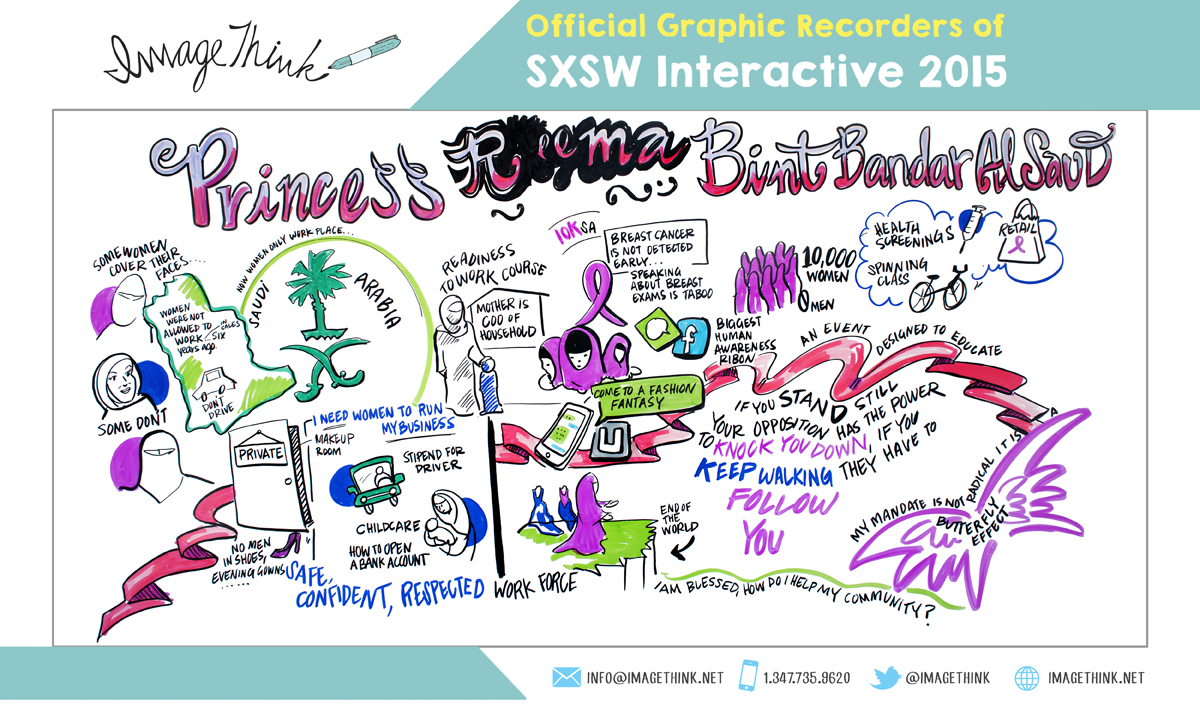
  • Princess Reema’s Mission to Empower Saudi Women
  • Are Brands Sabotaging Their Own Content?
  • Managing a Shit Storm and Restoring Your Brand
  • Beyond Marketing: How Curation Will Work for You

Friday, April 3, 2015

My First Uber

SxSW is all about new things and serendipity. Interesting conversations with complete strangers yield surprising new connections and discoveries. On the last day, I "discovered" Uber.

Of course, I'd heard of Uber, but I'd never had a reason or even the opportunity to try it. A random chat with the guys waiting for the shuttle found its way to the topic of Uber. Our fellow shuttler was a big fan and said he'd found himself regularly skipping the shuttle wait and just getting an Uber ride.

He was singing the praises of Uber, demoing the app, touting all its great features, and then suggested, "Hey, let's just take it. It's on me." What did we have to lose?

The app showed five Uber drivers near us. Our self-appointed Uber ambassador clicked a button and our ride was on the way. We saw the driver's name and car description along with an ETA. Three minutes later (no lie!) our ride was there.

The car was spotless and our driver seemed way safer than any cabbie I've ridden with. The final tab was $13.50. We hopped out, then rated the driver and paid through the app. No tipping and no card or cash needed. Bonus: similar cab rides were running folks $30.

My initial understanding of Uber basically being AirBnB for rides was spot on, and my first impression was very favorable. I'll definitely be downloading the app and looking for good opportunities to try it again, but only when I have my husband or another trusted rider in tow.  

Wednesday, April 9, 2014

Why Reading is a Flawed Dying Technology with Ed Castillo

Presenter: Ed Castillo, CSO, NY, TBWA\Chiat\Day
Hashtags: #DodoMedium

The title of this talk was just too good to pass up. Castillo admitted right off, he named the talk purposefully to get people riled up. Folks are touchy about reading; it's a sacred cow. Before anyone could light a torch and grab a pitchfork, he clarified: Curling up with a book is an artistic experience. That's not what he is talking about. He's talking about reading as a form of communication.

First, is reading dying or is it simply flawed? Castillo asked, are you reading less? If the answer is yes, that is support for the idea that reading is dying. He argues that it is also flawed.

If the intention of writing, speaking and gesturing is to communicate, then writing just isn't as good as other visuals. Writing is an imperfect medium for communicating. It's a point that is hard to argue with. We know the best form of communication is typically face-to-face. Little of what we are communicating is in our words alone, so how can writing do our message justice.

Castillo said, "I’m not trying to burn down the libraries..." If that's a reference to the future of books versus other media, I say, "Don't worry about us, Ed, we're way ahead of you."

Libraries have been thinking about the evolution of communication and our role in the changing media landscape for decades. But often we cling to traditional styles in our own communications.

In libraries, we use writing as a default mechanism for relaying information. How and when could we find other ways to communicate? I think there are a number of obvious answers worth exploring, but I also think this question could lead to some interesting discussion about new opportunities to communicate with our users. 

Monday, April 7, 2014

Tweet Like a Roman with Tom Standage

Presenter: Tom Standage, Digital Editor, The Economist
Hashtag: #RomanTweet

This was one of the SxSW "Future 15" sessions, which I love as a presentation format. Normal sessions are one hour, but Future 15s pack four sessions into an hour session. It forces speakers to get to the best information quickly. If a session turns out to be less than stellar, you only have to wait for 15 minutes. If the session are great (and usually they are) you get four times the sessions in one sitting.

"Tweet Like a Roman" wasn't as professionally educational as some, but it was super fun and very interesting. Standage spent his 15 minutes explaining how early communication was actually social media. For example, Romans depended on social distribution of media. They used abbreviations to keep messages short. They used tablet-like devices to record messages. They also used social connections to get ahead.

Standage gave a TEDx talk very similar to his SxSW presentation. You can watch him pack an hour's worth of information into 16 minutes below. 

Saturday, April 5, 2014

Travel Must Haves: Airplane Edition

I'm taking a weekend break from the SxSW updates to blog something a bit more personal. John and I are in countdown mode for our next trip (Ecuador!), and being the organizing geek that I am, I already obsessing over what to pack.

We're 25+ countries in to our mission to see the world, so you'd think I have this down by now. But every place is different, and we learn something new about travel each time. I was looking for posts on "Travel Must Haves," and I was a bit disappointed. I just kept thinking, my existing list is better than these. So I thought I'd share.

The complete list is pretty long, so I'm breaking it up. Here are must haves for the plane. I think you'll see my themes are stay warm and hydrate.

  • Snacks: Depending on the length of the flight, I pack a couple granola bars to sandwiches and sides. I get hunger-rage, so keeping my blood sugar level is vital to a happy flight. Seriously, if I got hungry enough the flight marshals would probably get called in. Rules are always changing, but typically you can get your food through security no problem as long as it's not a liquid. 
  • Water: Dehydration is what makes you feel icky after a flight. You won't get a bottle of water through security, but you can buy it after the checkpoint (or fill up your own at a water fountain) and bring it on the plane with you. I've had some international carriers prohibit this, but it's always worth a shot. 
  • Fuzzy Socks: Even on the shortest flights, I bring a thick pair of sock to change into. Those planes are cold! Fuzzy socks keep me warm and comfy. 
  • Neck Pillow & Blanket: Sure they'll provide these, just try not to think about where they've been. For longer flights when I know I'll want to sleep, I bring my own. I like an inflatable neck pillow (to save room in the bag) and a small throw-sized fleece blanket. 
  • Hand Wipes & Hand Sanitizer: Have I mentioned that planes are dirty, groody places? I wouldn't recommend washing your hands in the lavatory, much less your face. Hand wipes and sanitizer are a must to feel good and stay healthy. Use them before eating anything and any time you start feel grimy. 
  • Lotion, Moisturizing Spritz & Lip Balm: Hydrate, hydrate, hydrate, any way you can. These are essential for longer flights. I have this wonderful moisturizing aromatherapy face mist, I can't fly without it. Add some lotion and lip balm, and you can exit a 14 hour flight without feeling like the cryptkeeper.
  • Reading Material: Just duh. Don't underestimate how much you can read on a flight/trip. I once plowed through 8 books in a 2 week trek across India. E-readers are great for packing an assortment of books and magazines without bursting your carry on (or your baggage weight limit). 
  • Earbuds: Again, where have those prepacked headphones been? Answer, you don't want to know. Bring your own. Pro tip: pop them in with or without music to get the guy next to you to stop talking to you. 

So what am I missing? What are your must haves for the plane?


Friday, April 4, 2014

Compelling Image in the Age of Social Media: a Workshop

The number of workshops offered at this year's SxSW was greatly expanded. These hands-on sessions tended to span two or more time slots. It's hard enough to choose sessions, so to give up multiple time slots, a workshop needs to be pretty darn special. I was glad I gave up two and half hours of my first afternoon for Marty Coleman's photo mini-class.

The name of the session was a bit misleading. We talked very little about social media. It was actually a basic photography class using only smartphones.

The phone you carry around everyday has a better camera on it than any digital camera we had access to 10 years ago, but for some reason, many people don't trust their phone cameras. I don't know if early cell cameras tainted their view, or if they just haven't mastered holding the tiny panel still while tapping the screen.

In my office, we're already using our smartphones to capture a lot of the images we share on the Library's accounts. The intern team is particularly good at this. They'll see something interesting while they are walking into work, snap a photo with their phone and then upload when they get into the office. This workshop helped me realize that with a little instruction and a little motivation, all our employees could be contributing great images for our accounts.

If you've ever taken a basic photography class most of the lighting and composition techniques you learned will apply to smartphone images. Get good front lighting, look for interesting angles, and play attention to your composition.

We did a handful of quick photo exercises, but my favorite was looking for compelling images of empty spaces. If you've ever tried to put together a quote on photo, you'll appreciate this one. These popular social media postings work best when the majority of the picture provides a neutral canvas for your words.

Hashtags: #sxsw #compelling